
Eras
Visit our new project Our Fallen. This section includes Wartime, Pre-History and Medieval. Try the Wartime Timeline to look at some key dates in our history
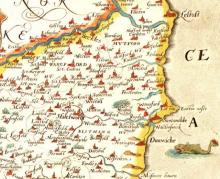
Christopher Saxton map showed Easton Ness as the most easterly point of Great Britain. Over the next decades, the action of the sea caused the salient to migrate north, to Lowestoft Ness.
Added: 23 September, 20231685 A sea survey by Greenville Collins showed the Standford Channel just off-shore (the name eventually contracted to the Stanford Channel).
Added: 23 September, 2023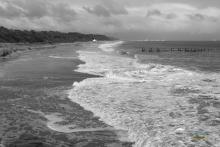
Way back in January storms revealed some of the buried remains of the Eleni V disaster.
East Suffolk Council have commissioned specialists to properly investigate how much oil remains and and to provide evidence for next steps.
Councillor James Mallinder, cabinet member for the Environment added: “Any excavations at the site may affect the rate of coastal erosion, and the surrounding environment, and so any decision about removing the deposits will be carefully considered.”
Added: 23 September, 20231735 Low Light moved because of changes to Stan(d)ford Channel
Added: 23 September, 2023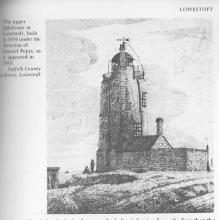
1676 Samuel Pepys was elected a Master of the Trinity Brethren, and immediately sanctioned a new Lowestoft lighthouse. A new Lighthouse tower was constructed, built of brick, this time on the cliffs. This became known as Lowestoft High Light. Trinity in its earlier records sometimes refers to the northernmost of the two Ness Point foreshore lights as the 'upper' light, which can be confusing.(drawing p93).
Added: 23 September, 20231706 the remaining Low Light ceased operation, possibly because "...the sea overwhelmed it..." (p97 Lights of East Anglia by Neville Long, 1983)
Added: 23 September, 20231670's The Lowestoft Lights were re-built again. A few years previously John Clayton had erected a coal-light a couple of miles north at Corton. Clayton's efforts to build lighthouses at various locations around the coast were seen by Trinity Brethren as being a threat to their monopoly.
Added: 23 September, 2023